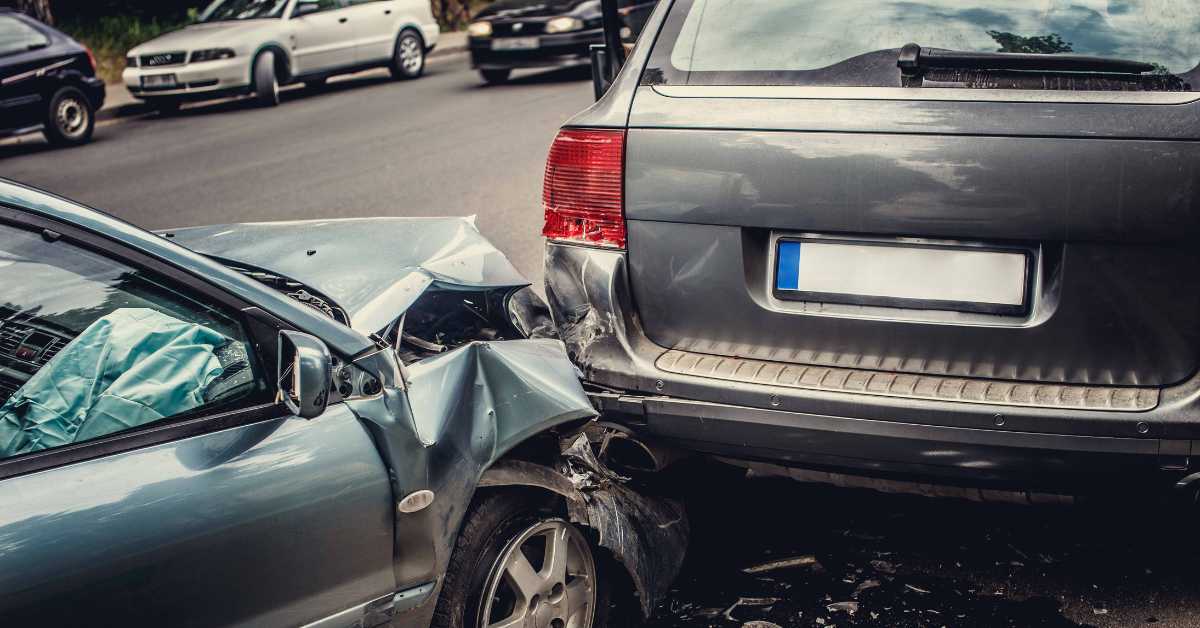
What to Do in the First 48 Hours After a Car Accident in Colorado

At Grant & Associates Law Firm, P.C. in Greeley, Colorado, we know that the decisions you make in the immediate aftermath of a motor vehicle collision dictate the long-term viability of your personal injury claim. The initial 48 hours serve as the critical window for securing evidence and satisfying state legal obligations.
Learn the immediate steps required under Colorado law to protect your physical health and safeguard your rights.
The First Few Minutes: Stay Safe and Call for Help
Your first job is safety, not fault. If you can, move your vehicle out of traffic and turn on your hazard lights. Check yourself and your passengers for injuries before you do anything else.
Then call 911. Under Colorado law (C.R.S. § 42-4-1606), you're required to stop, share your name, address, registration, and insurance information with the other driver, and give reasonable help to anyone who's hurt.
If the crash caused an injury, a death, or property damage over $1,000, you have to report it to law enforcement. When in doubt, call; a police report creates an official record you'll be glad to have later.
Document Everything While You're Still There
The scene tells a story that disappears fast. Use your phone to photograph the vehicle damage, license plates, the position of the cars, skid marks, road conditions, traffic signs, and any visible injuries. Take both wide shots and close-ups, because you can't go back and re-shoot them tomorrow.
Get the other driver's name, phone number, insurance company, and policy number. If there are witnesses, ask for their names and numbers before they leave; independent accounts carry real weight with an insurer or a jury. Jot down the time, the weather, and exactly what happened while it's still fresh in your mind.
See a Doctor, Even If You Feel Fine
Adrenaline hides pain. Plenty of serious injuries, such as whiplash, concussions, and soft-tissue damage, don't show up until a day or two later. Getting checked out within the first 48 hours protects your health and ties your injuries to the crash in your medical records.
Here's why the timing matters. If you wait two weeks to see a doctor, expect the other driver's insurer to argue your injuries came from something else entirely. A prompt visit closes that door. Keep every bill, discharge note, and follow-up instruction in one place.
Report the Accident and Notify Your Insurer
Beyond the police report at the scene, you'll want to tell your own insurance company about the crash promptly. Most policies require timely notice, and reporting an accident isn't the same as admitting you caused it.
Stick to the facts when you do: the date, the location, and what happened. You're describing the event, not assigning blame, and you don't need to speculate about who was at fault.
Write down the claim number your insurer gives you and the name of every adjuster you speak with. If the police took a report at the scene, ask the officer how to get a copy once it's filed, since it usually takes a few days to become available. Keeping these details organized from day one saves you real headaches if the claim drags on.
Understanding Colorado's Insurance Laws
Colorado runs on an at-fault system. That wasn't always true; the state dropped its old no-fault setup in 2003, but today the driver who causes a crash, through their liability insurance, is responsible for the harm. Knowing how that coverage works tells you where your compensation will actually come from.
Liability insurance is the foundation, and the state minimum is 25/50/15: $25,000 for injury to one person, $50,000 per accident, and $15,000 for property damage. Here's the catch most drivers miss: liability only pays other people. It does nothing for your own injuries or your own vehicle. So if the driver who hit you carries only the minimum, that $25,000 can vanish against a single surgery.
That gap is why two other coverages matter so much. Uninsured and underinsured motorist (UM/UIM) coverage steps in when the at-fault driver has no insurance or not enough. Colorado requires insurers to offer it in an amount matching your liability limits, and you only lose it if you rejected it in writing (C.R.S. § 10-4-609); so check your policy, because you may have more protection than you realize. Your insurer also can't raise your rates for using UM/UIM after a crash that wasn't your fault.
Medical payments coverage, or MedPay, is the other one to know. Your insurer has to offer you at least $5,000 in MedPay, and it's part of your policy unless you turned it down in writing (C.R.S. § 10-4-635). It pays your medical bills quickly and regardless of who was at fault, which makes it a useful bridge while a liability claim plays out.
Colorado also gives you real leverage against your own insurer. Under the state's first-party bad-faith statutes, a carrier that unreasonably delays or denies benefits you're owed can be liable for two times the benefit plus your attorney fees. Insurers know this, and it's one reason having a lawyer in your corner can change how they treat your claim.
Fault and Filing Deadlines in Colorado
Because Colorado is an at-fault state, the driver who caused the crash drives everything, and fault is rarely all-or-nothing. The state uses modified comparative negligence: you can still recover even if you were partly to blame, as long as you're less than 50% responsible, but your award drops by your share of the fault.
Say you're rear-ended at a light on 10th Street in Greeley, but you'd just changed lanes without signaling. A jury might assign you 15% of the fault. If your damages come to $100,000, you'd recover $85,000. Reduced, but far from erased.
You also have a deadline. In Colorado, you generally have three years from the date of a car accident to file a lawsuit for your injuries or property damage (C.R.S. § 13-80-101); longer than the two-year window that applies to most other injury claims, and shorter for wrongful death. Three years feels like forever right after a crash, but evidence fades and witnesses move, so the sooner you act, the stronger your case.
Tips From a Colorado Personal Injury Lawyer
A few habits, picked up from years of watching claims succeed and fall apart, make a real difference:
- Keep one folder for everything. Physical or digital, store the police report, medical bills, repair estimates, photos, and a running log of who you spoke with and when, all in one place.
- Follow your treatment plan. Don't skip appointments. Gaps in care are the first thing an insurer points to when it wants to argue you weren't really hurt.
- Track losses beyond the obvious. Mileage to medical appointments, prescription costs, and time missed from work all add up, and they're recoverable.
- Read before you sign. Don't sign anything from an insurer, especially a medical authorization or a release, until you understand exactly what it covers. A broad authorization can hand over your entire medical history.
- Check the police report for errors. Get a copy once it's available and read it closely. Mistakes happen, and they're far easier to correct early than after a claim is underway.
Crucial Mistakes to Avoid
Some missteps quietly sink otherwise strong claims. Steer clear of these:
- Admitting fault at the scene. A reflexive “I'm sorry” can be twisted into an admission later, even when the wreck wasn't your fault. Exchange information, talk to the police, and leave the blame to the investigation.
- Giving a recorded statement to the other insurer. You're not required to, and adjusters are trained to get you to say things that shrink your payout.
- Accepting the first settlement offer. Early offers often arrive before you know the full extent of your injuries, and once you sign a release, you can't reopen the claim.
- Posting about the crash on social media. A photo of you smiling at a barbecue can be used to argue you're not really hurt. Insurers do look.
- Letting medical treatment lapse. Skipping appointments or waiting weeks to see a doctor gives the insurer an opening to blame your injuries on something else.
- Missing the filing deadline. Wait too long and the three-year statute of limitations can bar your claim entirely, no matter how strong it is.
When to Call a Personal Injury Lawyer
Not every fender-bender needs a lawyer. But if anyone was injured, fault is disputed, or an insurer is dragging its feet or lowballing you, it's worth a conversation. Most Colorado personal injury attorneys offer a free consultation and work on contingency, which means you don't pay unless they recover money for you.
A lawyer can deal with the adjusters, gather evidence before it's gone, and make sure your medical costs, lost wages, and pain and suffering are all accounted for. Understanding how Colorado's personal injury damage caps apply to serious injuries is part of that picture, too.
Injured in a Colorado Car Accident? Talk to Grant & Associates
Knowing what to do after a car accident in Colorado is only half the battle; the other half is making sure someone protects your claim. If you or a loved one has been hurt in a crash, contact Grant & Associates Law Firm, P.C. in Greeley, Colorado at (970) 356‑5666 or schedule a free case review.
Our personal injury attorneys can handle the insurance companies, protect your rights, and help you pursue the full compensation you're owed. The sooner you reach out, the more we can do.
Frequently Asked Questions
Do I have to call the police after a car accident in Colorado?
You're required to report a crash that causes injury, death, or more than $1,000 in property damage. Since most accidents clear that property-damage threshold, calling the police is usually the safe move, and the report helps your claim.
How long do I have to file a car accident claim in Colorado?
Generally, three years from the date of the accident for injury and property damage claims (C.R.S. § 13-80-101). Wrongful death claims have a shorter, two-year window. It's best to start well before the deadline, while the evidence is still fresh.
Does Colorado require me to carry UM/UIM or MedPay coverage?
No. Colorado requires insurers to offer both, but you can reject them in writing. If you never signed a rejection, you likely have UM/UIM matching your liability limits and at least $5,000 in MedPay, so it's worth checking your policy.
Should I talk to the other driver's insurance company?
You can report the accident, but you're not required to give a recorded statement to the other driver's insurer. It's wise to be cautious, since anything you say can be used to reduce your payout. Many people let their own attorney handle those conversations.
What if the accident was partly my fault?
You can still recover in Colorado as long as you're less than 50% at fault. Your compensation is reduced by your percentage of responsibility, so if you're found 20% at fault, you receive 80% of your damages.