Colorado Field Sobriety Tests, Roadside Breath Tests, and the Official DUI Test: A Driver’s Guide
At Grant & Associates Law Firm, P.C. in Greeley, Colorado, we know that the absolute confusion surrounding roadside testing is one of the biggest liabilities a driver faces during a traffic stop. Failing to understand the critical distinction between voluntary roadside screenings and mandatory post-arrest testing can severely damage your defense strategy.
This guide breaks down the three distinct categories of a Colorado DUI test, outlining exactly which assessments you can legally decline, which ones carry mandatory penalties, and how state law dictates your choices.
The Three Colorado DUI Tests and Their Differences
A Colorado DUI stop usually involves up to three separate tests, and they don't carry the same weight. The first two happen at the roadside, before any arrest: the field sobriety tests and the preliminary breath test. Both are voluntary. The third, the official chemical test of your blood or breath, comes after an arrest, and the express consent law governs it.
Officers aren't required to tell you which tests are optional, and many drivers assume they have to do everything they're asked. They don't. The catch is that refusing the wrong test, or refusing in a way that gets misunderstood, can cost you your license for a year or more.
Standardized Field Sobriety Tests (SFSTs) Are Entirely Voluntary
The moment an officer asks you to step out of your vehicle to perform physical movements, you are entering the pre-arrest screening phase. These are known as Standardized Field Sobriety Tests (SFSTs).
In Colorado, there are three standardized ones: the horizontal gaze nystagmus test (following a pen or light with your eyes), the walk-and-turn, and the one-leg stand.
You are not required to perform any of them. Colorado law treats field sobriety tests as completely voluntary, and declining them carries no license penalty or DMV consequence. They exist to help the officer build probable cause for an arrest.
Here's the trade-off. If you take these tests and the officer decides you “failed,” that result can be used against you in court, and the tests are subjective, with documented error rates even for sober people. That's why many defense attorneys suggest politely declining. Whatever you decide, stay calm and respectful, because arguing or appearing combative can itself become evidence.
Preliminary Breath Tests (PBTs) Are Also Voluntary
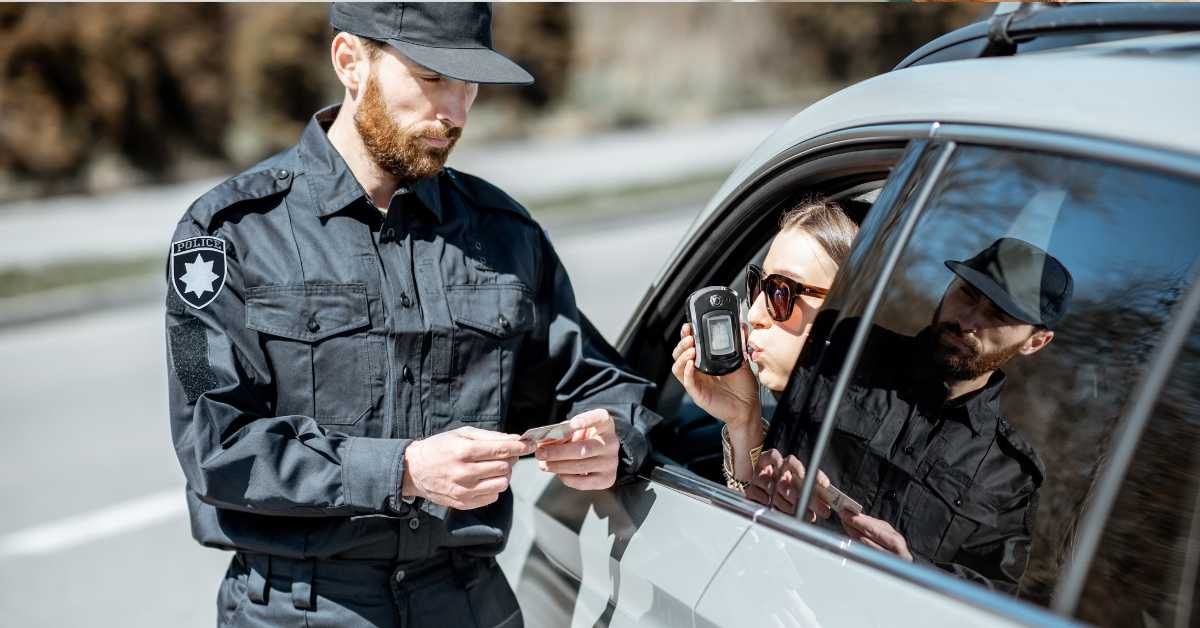
The preliminary breath test, or PBT, is a small handheld breathalyzer that an officer may offer at the roadside. Don't confuse it with the official breath test at the station; they aren't the same thing.
For drivers 21 and over, the PBT is voluntary, and you can decline it without any license penalty. Its results are used only to help establish probable cause, and Colorado law specifically bars PBT readings from being used as evidence of guilt at trial. There's one exception: if you're under 21 and the officer reasonably suspects you've been drinking, you're required to take it.
Officers sometimes make the PBT sound mandatory. For most drivers, it isn't, and knowing that puts the choice back in your hands.
The Official Chemical Test and Colorado's Express Consent Law
Everything changes once you're under arrest. Colorado's express consent law (C.R.S. § 42-4-1301.1) says that by driving on Colorado roads, you've already agreed to take a chemical test of your blood or breath if an officer has probable cause to arrest you for DUI or DWAI. This is the test that counts.
You generally get to choose between a breath test and a blood test. Breath gives immediate results; blood takes longer to process, but can be retested later and is often more reliable. If drugs are suspected, a blood test may be required. Either way, the test has to happen within two hours of driving to be valid.
This is the one test you can't refuse without serious, automatic consequences, and those consequences are separate from whatever happens with the criminal charge itself.
What Refusing the Chemical Test Actually Triggers
Refusing the chemical test sets off a chain of penalties through the DMV, and they apply even if you're never convicted of DUI. A first refusal means a one-year license revocation. A second is two years, and a third is three.
On top of that, a refusal automatically labels you a Persistent Drunk Driver, requires an ignition interlock device for two years once your license is reinstated, and mandates a Level II alcohol education program. Your refusal can also be introduced at trial as evidence of guilt; you can't treat it as protected silence.
By comparison, taking the test and failing it, a BAC of 0.08 or higher, carries a shorter nine-month revocation for a first offense. That's part of why refusal isn't the automatic shield some people assume it is.
Two things people miss. First, “refusing” isn't just saying no; stalling, asking endless questions, or failing to complete the test can all count as a refusal. Second, you have only seven days after the arrest to request a DMV express consent hearing to fight the revocation. Miss that window, and the suspension takes effect automatically.
The Mistake That Costs People Their License
Here's the trap. Officers don't always keep the voluntary roadside tests and the mandatory chemical test clearly separate, and sometimes they treat your refusal of the roadside tests as a refusal of everything. If that happens, you could face a full express-consent revocation for declining tests you had every right to decline.
So if you choose to turn down the field sobriety tests or the PBT, say it clearly: you're declining the voluntary roadside tests, and you're willing to take the official chemical test if you're arrested. Spelling that out protects your license.
Colorado's BAC Thresholds at a Glance
Colorado measures alcohol impairment by blood alcohol concentration (BAC):
- DUI per se: 0.08% or higher.
- DWAI (driving while ability impaired): above 0.05% and below 0.08%, which lets a jury infer impaired driving (C.R.S. 42-4-1301(6)(a)(II)).
- Underage drinking and driving (under 21): 0.02% up to 0.05%.
A BAC below these numbers doesn't automatically clear you. An officer can still pursue a DUI based on other evidence of impairment, including drugs.
How It Plays Out: A Quick Example
Picture a driver leaving a Greeley restaurant after two beers. Flashing lights appear, and the officer asks her to step out, follow a pen with her eyes, and walk a straight line. She remembers these are voluntary and politely declines, while making clear she'll take a breath or blood test if she's arrested. She's arrested anyway and takes the official breath test at the station.
Declining the roadside tests costs her nothing, and her attorney later has far less subjective “failed coordination” evidence to fight. The distinction she understood in the moment shaped her entire case.
When to Call a Colorado DUI Defense Lawyer
A DUI stop moves fast, and the decisions you make on the roadside and at the station follow you into both the courtroom and the DMV. If you've been arrested, the seven-day clock to request a DMV hearing is already running, so quick action matters.
A defense lawyer can challenge the legality of the stop, the officer's advisement, and the testing procedure, any of which can change the outcome. And if you suspect a medical condition affected how you looked or performed, it helps to know that several medical conditions can mimic the signs of DUI. An experienced defense attorney can pull those threads before they harden into a conviction.
Charged With DUI in Colorado? Talk to Grant & Associates
If you're facing a DUI or DWAI charge in Colorado, don't wait. Whether your case turns on the traffic stop, the officer's advisement, or how the Colorado field sobriety tests were handled, the details matter.
Contact Grant & Associates Law Firm, P.C. in Greeley, Colorado at (970) 356-5666 or schedule a consultation. Our criminal defense attorneys can protect your driving privileges, challenge the evidence, and guide you through both the DMV and the courtroom. With only seven days to act on your license, early legal help can change everything.
Frequently Asked Questions
Can I refuse a field sobriety test in Colorado?
Yes. Field sobriety tests are voluntary in Colorado, and declining them carries no license penalty. They're used to build probable cause, and if you take them, a “failed” result can be used against you in court.
Is the roadside breathalyzer the same as the official breath test?
No. The roadside preliminary breath test (PBT) is a voluntary screening tool, and its result can't be used to prove guilt at trial. The official chemical test, given after arrest, is the one that counts and is covered by the express consent law.
What happens if I refuse the chemical test after a DUI arrest?
Your license is revoked automatically, one year for a first refusal, and you're designated a Persistent Drunk Driver, required to use an ignition interlock for two years after reinstatement. Your refusal can also be used against you at trial, and you have only seven days to request a DMV hearing.
Do I have to take the preliminary breath test if I'm under 21?
Yes. Drivers under 21 are required to take the PBT if the officer reasonably suspects they've been drinking. For drivers 21 and over, the PBT is voluntary.
Does refusing tests mean I won't be convicted of DUI?
No. An officer can still arrest you based on other evidence, and refusing the chemical test brings its own penalties. Refusal doesn't protect you from a DUI conviction; it usually just adds hurdles.