

Greeley DUI Defense Attorneys
A DUI arrest starts two cases at once: a criminal case in court and a license case at the DMV, each with its own deadlines. The first deadline comes fast. You have seven days to ask for a DMV hearing, or your license is revoked without one. We explain both cases, handle them together, and tell you plainly what you are facing.
We know DUI cases from both sides of the courtroom. Tom Grant has served as a Nunn, Colorado, municipal court judge and as the City of Greeley's lead criminal prosecutor. He and Philip Anderson defend DUI and DWAI cases in the Weld County courts in Greeley, in Larimer County, and regularly in the Morgan and Logan County courts.
DUI cases we handle
- First-offense DUI and DWAI
- Second and third offenses, and felony DUI after three prior convictions
- Refusing a breath or blood test
- Drug and marijuana DUI, including prescription medication
- High-BAC cases and the "persistent drunk driver" designation
- Drivers under 21
- Commercial (CDL) drivers
- Out-of-state drivers arrested in Colorado
- DUI after an accident, vehicular assault and vehicular homicide
- The DMV hearing, early reinstatement and the ignition interlock
Arrested for DUI? Do this now
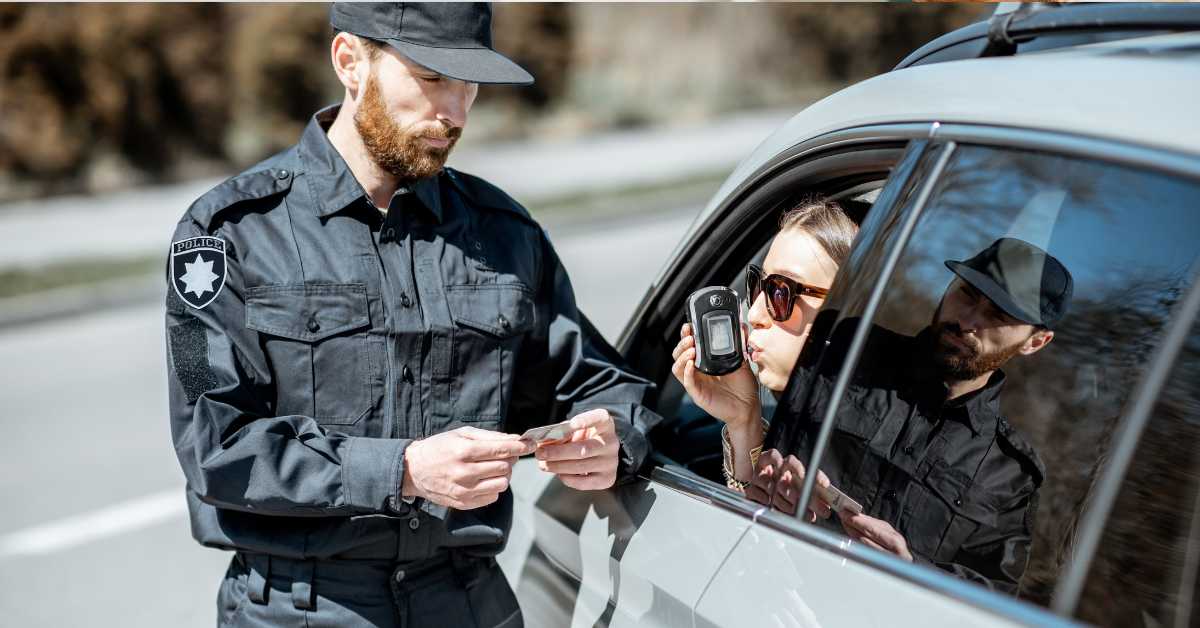
- Request your DMV hearing within seven days. The DMV counts seven calendar days from the arrest, or from the date on its letter if you took a blood test. Miss it and the revocation goes ahead without a hearing (C.R.S. 42-2-126(7)(b)). The request is made through myDMV; the DMV explains how. If the hearing is granted, you get a temporary permit to drive until it.
- Keep the paperwork: the notice of revocation the officer gave you, the summons, and any test result.
- Write down the stop while you remember it: the times, what you drank or took and when, what the officer said, and which tests you were asked to do.
- Do not talk about the case with anyone but your lawyer.
- Never miss a court date. A missed date can mean a warrant.
- Call us before your first court date if you can: (970) 356-5666.
The criminal case
Colorado has two drinking-and-driving charges. DUI means alcohol or drugs left you substantially incapable of driving safely; driving with a blood alcohol content of 0.08 or more, at the time or within two hours, is DUI on its own (C.R.S. 42-4-1301(1)(f), (2)(a)). DWAI, driving while ability impaired, means you were affected to the slightest degree (42-4-1301(1)(g)). A test result above 0.05 and below 0.08 lets the jury infer DWAI; 0.08 or more lets it infer DUI; and 5 nanograms or more of THC per milliliter of blood lets it infer drug DUI (42-4-1301(6)(a)).
A misdemeanor DUI is heard in county court; a felony in district court. In Weld County that is the Weld County Courthouse at 901 9th Ave in Greeley, a few blocks from our office.
What the law allows on conviction (C.R.S. 42-4-1307):
| Conviction | Jail | Fine | Public service |
|---|---|---|---|
| First DWAI | 2 to 180 days | $200 to $500 | 24 to 48 hours |
| First DUI | 5 days to 1 year | $600 to $1,000 | 48 to 96 hours |
| Second offense | 10 consecutive days to 1 year | $600 to $1,500 | 48 to 120 hours |
| Third offense | 60 consecutive days to 1 year | $600 to $1,500 | 48 to 120 hours |
On a first offense the minimum jail can be suspended if you complete the alcohol and drug program your evaluation calls for, and a test of 0.20 or more brings at least 10 days. A second or later offense carries at least two years of probation. Every conviction comes with an alcohol and drug evaluation (42-4-1301.3). What a particular case leads to depends on its facts, the court and your record.
Prior convictions count however old they are, including convictions in other states. After three prior convictions, a new DUI or DWAI is a class 4 felony (42-4-1301(1)(a), (b)). A DUI that seriously injures someone can be charged as vehicular assault, a class 4 felony, and one that kills someone as vehicular homicide, a class 3 felony (C.R.S. 18-3-205, 18-3-106).
The DMV case
The license case is separate from the court case: winning one does not decide the other. At the hearing, a DMV hearing officer decides whether the revocation stands; we can see the evidence, question the arresting officer and present your side. Hearings are currently held by video.
| Revocation (C.R.S. 42-2-126(3)) | First | Second | Third or later |
|---|---|---|---|
| Test of 0.08 or more | 9 months | 1 year | 2 years |
| Refusing a test | 1 year | 2 years | 3 years |
| Under 21, 0.02 to 0.05 | 3 months | 6 months | 1 year |
Many drivers can get back on the road sooner with an ignition interlock. Today, a driver 21 or older revoked for a first offense can apply for early reinstatement with an interlock at any time, and after a refusal, once two months have passed (C.R.S. 42-2-132.5(4)). A test of 0.15 or more, or a refusal, marks you a "persistent drunk driver," which means at least two years with an interlock after reinstatement (42-1-102(68.5); 42-2-132.5(3)). For revocations from June 1, 2027, a new law requires nine months of interlock after a first offense, drops the two-month wait after a refusal, and adds help with interlock costs based on income (House Bill 26-1242).
DUI cases in Morgan and Logan counties
Arrests on I-76, US 34 and US 6 are heard in the Thirteenth Judicial District: the Morgan Combined Court in Fort Morgan and the Logan County Combined Courts in Sterling. Our attorneys are in those courts regularly from our Greeley office, so a case out there gets the same attention as one down the street. See our Fort Morgan and Sterling page for the other matters we handle there.
Talk with a Greeley DUI lawyer
Based in Northern Colorado, with our office in Greeley, we represent clients along the entire Front Range and across Colorado. Call our office or message our attorneys, ideally before your seven days run out. See also our criminal defense page.
Colorado DUI questions
What is the difference between DUI and DWAI?
DUI means alcohol or drugs left you substantially incapable of driving safely, and a test of 0.08 or more is DUI on its own. DWAI means your ability was affected to the slightest degree, and a test above 0.05 lets the jury infer it (C.R.S. 42-4-1301). DWAI carries lower penalties, but it counts as a prior conviction for any later case.
What happens on a first DUI in Colorado?
The court can impose 5 days to a year in jail, a fine of $600 to $1,000, 48 to 96 hours of public service and up to two years of probation (C.R.S. 42-4-1307(3)). The minimum jail can be suspended if you complete the alcohol and drug program your evaluation calls for. Separately, the DMV revokes your license for nine months after a test of 0.08 or more, unless the hearing goes your way, and you may be able to drive sooner with an interlock.
Can I refuse a breath or blood test?
You can, but a refusal has its own cost: a license revocation of a year for a first refusal, the "persistent drunk driver" designation, and the refusal can be used as evidence at trial (C.R.S. 42-2-126(3)(c); 42-4-1301(6)(d)). A driver 21 or older asked to test for alcohol chooses breath or blood, and the choice is final; the test has to be taken within two hours of driving (42-4-1301.1).
When is a DUI a felony?
A DUI or DWAI after three or more prior DUI-related convictions is a class 4 felony, however old the priors are (C.R.S. 42-4-1301(1)). A DUI that seriously injures or kills someone is charged as vehicular assault or vehicular homicide, both felonies.
Can I be charged for marijuana or prescription medication?
Yes. DUI and DWAI cover any drug, legal or not, that impairs your driving. For marijuana, 5 nanograms or more of THC per milliliter of whole blood lets the jury infer impairment (C.R.S. 42-4-1301(6)(a)(IV)), but impairment can be argued either way, which is why these cases are often worth fighting.
Can a DUI be sealed?
Usually not. Colorado excludes DUI and DWAI convictions from ordinary record sealing (C.R.S. 24-72-706(2)(a)). A misdemeanor DUI can still be sealed if the district attorney consents, or if the court finds by clear and convincing evidence that your need is significant and you are no longer a risk to public safety (24-72-706(2)(b)). A dismissed case is a different matter and can usually be sealed.
I drive commercially, or I live in another state. What changes?
A CDL holder convicted of a first DUI, in a commercial vehicle or their own car, or who refuses a test, loses the CDL for a year under federal rules, three years when hauling hazardous materials (49 CFR 383.51). In a commercial vehicle the limit is 0.04. A driver from another state loses the privilege to drive in Colorado, and the conviction is reported to the home state, which may act on its own license.
This page is general information about Colorado law, not legal advice for your case. Laws change; the figures here were last reviewed on October 19, 2026.
Related practice areas
Articles on this topic

Call An Experienced Attorney
Our lawyers will review your case details and give you a clear plan for how we can help. Based in Northern Colorado, we represent clients along the entire Front Range and across Colorado. Call our law firm or send an email to talk to a professional and understanding attorney.